Revealing Africa’s great potential

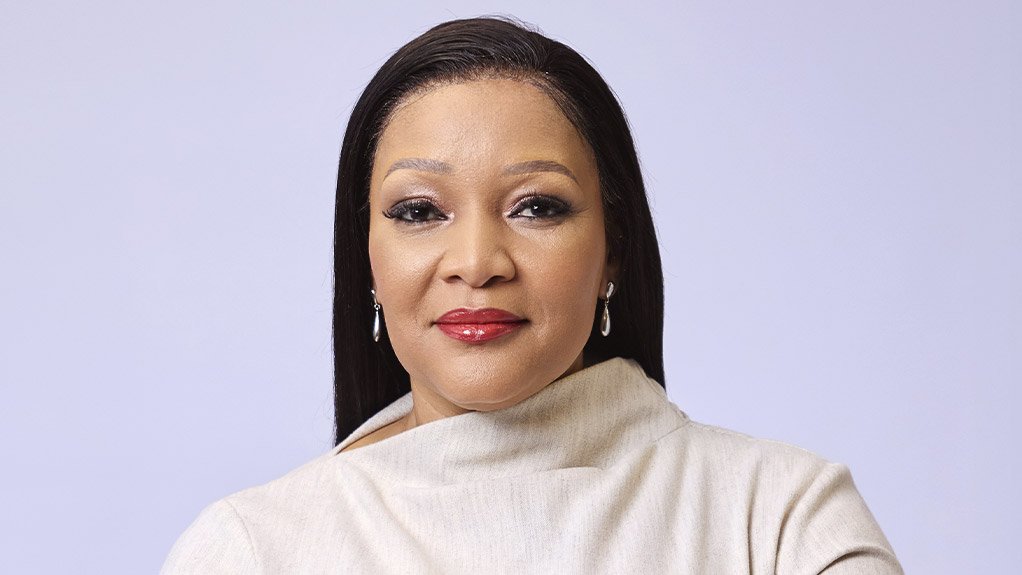



This article has been supplied.
By Canninah Dladla, Cluster President for SSA at Schneider Electric
The well-known Richard Mullin quote: The only man I envy is the man who has not yet been to Africa, for he has so much to look forward to, aptly captures the continent, its people, its breathtaking beauty and its great potential.
Indeed, in 2026 Africa stands stands at a significant moment in its development journey. Governments, business and communities are coming together, navigating numerous challenges but also establishing the foundation for tremendous growth.
An important part of the continent’s journey is understanding that Africa will not be built on external investment or imported solutions but an inwards strength that sees it investing in people, regional markets and industries whilst driving long-term prosperity.
What struck me most at the recent Africa CEO Forum in Kigali, Rwanda is the consensus that continent’s growth will be unlocked not by importing solutions, but by building capacity from within. Our role as leaders is to ensure that electrification, digitalisation, and industrial localisation are grounded in African realities.
Furthermore, findings by the Organisation for Economic Co-operation and Development (OECD) and the African Union Africa Development Dynamics Overview 2025 suggest that strategic investments in infrastructure, industrialisation and intra-African trade could accelerate GDP growth over the next two decades while also reducing exposure to global economic shocks.
Africa’s youth dividend
The continent’s greatest strength is its people and particularly its youth. With the youngest population in the world, more than 60% of all African are under the age of 25, the demographic advantage is unquestionable.
It has the potential to become one of the most significant economic growth drivers globally, but only if supported by deliberate investment in education, technical skills, entrepreneurship, and digital inclusion.
Already, we are seeing that if investment is made, local talent will flourish For example, technology hubs in countries such as Nigeria, Kenya, Rwanda, and South Africa are creating innovative solutions tailored to African realities, from digital payments and agri-tech platforms to renewable energy systems and healthcare solutions.
Moving beyond commodity dependence
Africa’s long-term resilience will depend on diversifying beyond traditional commodity-based economies. For decades, many African countries have relied heavily on exporting raw materials while importing finished products. This model leaves economies vulnerable to fluctuating global commodity prices and external market instability.
Encouragingly, several countries are moving away from this model; Morocco has developed a globally competitive automotive manufacturing sector, while Ethiopia has invested in industrial parks designed to stimulate local manufacturing and supply chains.
Also, and importantly, Africa’s clean energy investment has nearly tripled in recent years, rising from USD 17 billion in 2019 to close to USD 40 billion in 2024, while agribusiness already contributes 23% of Sub-Saharan Africa’s GDP and is projected to reach USD 1 trillion by 2030.
Infrastructure is the foundation for growth
Energy and infrastructure will play a non-negotiable role in enabling Africa’s transformation. The reality is that without reliable, efficient, and sustainable infrastructure, industrialisation and digital growth won’t be able to scale.
It is here where access to electricity, modernising grids, improving transport systems, and investing in decentralised energy solutions will be critical to unlocking economic participation for millions of Africans.
According to the African Union, Africa will require substantial annual infrastructure investment to meet its productive transformation needs and support long-term economic resilience.
African-led innovation
The power of local know-how and innovation can never be underestimated. And some of the most innovative solutions on the Africa continent are emerging from within local communities.
Community-led microgrids, climate-smart agricultural initiatives, and locally developed clean energy projects are proving that African-led innovation can address both developmental and environmental challenges simultaneously.
In rural Tanzania, community-led solar microgrids have transformed villages by providing reliable electricity for schools, clinics, and small businesses, while simultaneously reducing reliance on diesel generators.
Whereas farmers in Kenya are adopting climate-smart practices such as solar-powered irrigation and digital platforms like Apollo Agriculture, which use AI to extend credit and advice to smallholders
.These solutions are often more adaptable and sustainable because they are designed by people who understand the realities of their own communities.
The power of regional integration
Regional collaboration will also be essential to Africa’s future growth story. No single African country can fully unlock its economic potential in isolation. This is where the African Continental Free Trade Area (AfCFTA) becomes particularly significant.
As the world’s largest free trade area by participating countries, AfCFTA has the potential to reshape the continent’s economic landscape by reducing trade barriers, strengthening regional supply chains, and boosting intra-African trade.
Ultimately, AfCFTA also represents the spirit of cooperation on the continent that ensures that its regions and people grow from within, in tandem. with one another.
Africa’s story of great potential has begun and it’s an exciting journey, indeed.
Article Enquiry
Email Article
Save Article
Feedback
To advertise email advertising@creamermedia.co.za or click here
Research Reports
Projects


Latest Multimedia

Latest News


Showroom
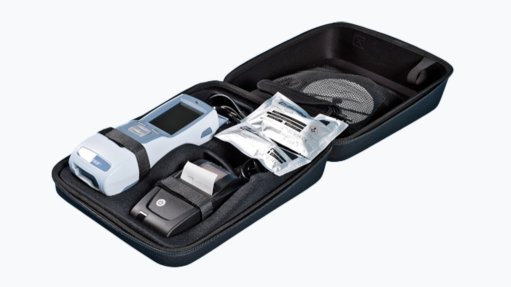
Developed to exceed the latest EN 15964 standards for police breathalysers proving that it will remain accurate and reliable for many years to come.
VISIT SHOWROOM
Supplier & Distributor of the Widest Range of Accurate & Easy-to-Use Alcohol Breathalysers
VISIT SHOWROOM



Press Office
Announcements
What's On
Subscribe to improve your user experience...
Option 1 (equivalent of R125 a month):
Receive a weekly copy of Creamer Media's Engineering News & Mining Weekly magazine
(print copy for those in South Africa and e-magazine for those outside of South Africa)
Receive daily email newsletters
Access to full search results
Access archive of magazine back copies
Access to Projects in Progress
Access to ONE Research Report of your choice in PDF format
Option 2 (equivalent of R375 a month):
All benefits from Option 1
PLUS
Access to Creamer Media's Research Channel Africa for ALL Research Reports, in PDF format, on various industrial and mining sectors
including Electricity; Water; Energy Transition; Hydrogen; Roads, Rail and Ports; Coal; Gold; Platinum; Battery Metals; etc.
Already a subscriber?
Forgotten your password?
Receive weekly copy of Creamer Media's Engineering News & Mining Weekly magazine (print copy for those in South Africa and e-magazine for those outside of South Africa)
➕
Recieve daily email newsletters
➕
Access to full search results
➕
Access archive of magazine back copies
➕
Access to Projects in Progress
➕
Access to ONE Research Report of your choice in PDF format
RESEARCH CHANNEL AFRICA
R4500 (equivalent of R375 a month)
SUBSCRIBEAll benefits from Option 1
➕
Access to Creamer Media's Research Channel Africa for ALL Research Reports on various industrial and mining sectors, in PDF format, including on:
Electricity
➕
Water
➕
Energy Transition
➕
Hydrogen
➕
Roads, Rail and Ports
➕
Coal
➕
Gold
➕
Platinum
➕
Battery Metals
➕
etc.
Receive all benefits from Option 1 or Option 2 delivered to numerous people at your company
➕
Multiple User names and Passwords for simultaneous log-ins
➕
Intranet integration access to all in your organisation